Essentials Size Guide: A Comprehensive Overview (Updated March 31, 2026)
Navigating apparel sizes can be tricky; this guide simplifies the process, utilizing flat line icons representing body measurements like waist, hip, and chest for clarity.
Understanding Essentials Clothing
Essentials clothing focuses on providing foundational wardrobe pieces – classic t-shirts, comfortable hoodies, versatile pants, and everyday basics – designed for a broad range of individuals. The brand prioritizes simplicity and comfort in both style and fit, aiming to deliver high-quality garments at accessible price points.

However, achieving the perfect fit relies heavily on understanding how Essentials sizes align with your unique body measurements. Unlike some brands that lean towards vanity sizing, Essentials generally adheres to fairly standard sizing conventions, but variations can still occur. This is where a detailed size guide becomes invaluable.
Because Essentials offers a diverse range of products, from fitted tees to relaxed-fit sweatpants, understanding the intended silhouette of each item is crucial. The brand utilizes icons representing body measurements – waist circumference, hip, chest, sleeve length, and height – to help customers select the most appropriate size. Paying attention to these details ensures a comfortable and flattering fit.
Why Size Guides Matter for Essentials
Given the brand’s commitment to foundational pieces, a proper fit is paramount with Essentials clothing. Unlike statement pieces where a slightly off-size can be overlooked, basics demand a comfortable and flattering silhouette. Relying on assumed sizes can lead to disappointment and unnecessary returns.
Essentials utilizes a sizing system based on standard body measurements, represented by flat line icons detailing waist, hip, chest, and inseam. However, individual body shapes vary, and a size labeled ‘Medium’ from one retailer isn’t always equivalent to a ‘Medium’ elsewhere.
A comprehensive size guide, like this one, bridges that gap. It empowers you to take accurate measurements and cross-reference them with Essentials’ specific charts. This minimizes guesswork, reduces the likelihood of ordering the wrong size, and ultimately ensures you enjoy the comfort and quality Essentials intends. Accurate sizing translates to a better overall experience.
General Sizing Principles for Essentials
Essentials generally adheres to standard US sizing, but subtle variations exist depending on the garment type and intended fit. Understanding these principles is crucial for selecting the correct size. The brand often employs a ‘true-to-size’ approach, meaning their sizes typically align with conventional measurements.
However, consider fabric composition. Items with stretch, like certain leggings or knit tops, may offer more flexibility in fit. Conversely, woven fabrics, such as those used in some shorts, may have less give. Always prioritize accurate measurements over simply choosing your usual size.
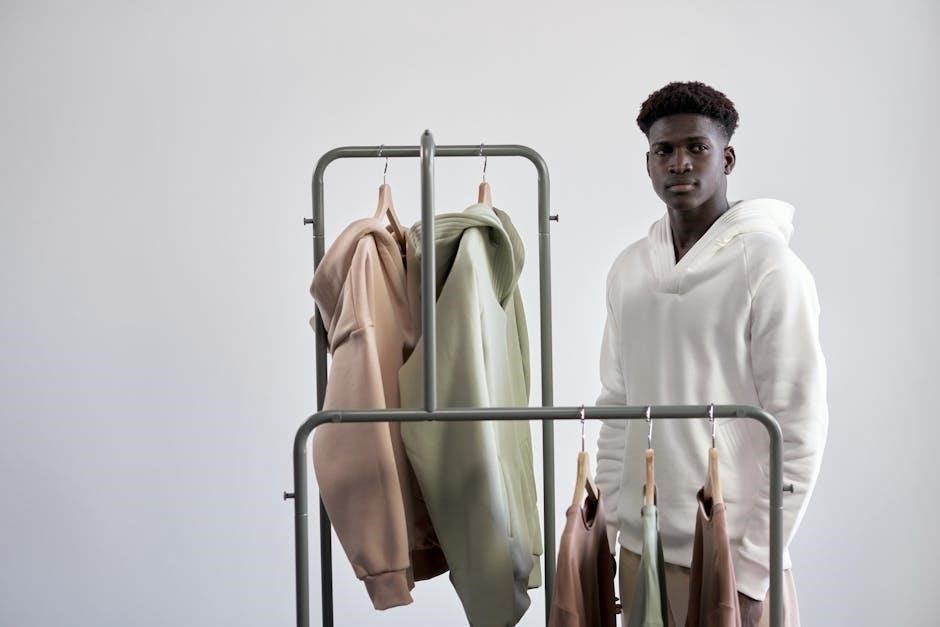
Pay attention to fit descriptions – ‘slim,’ ‘regular,’ or ‘relaxed’ – as these indicate the garment’s intended silhouette. Referencing the detailed measurement charts provided for each product category is highly recommended. These charts, utilizing body measurement icons, are your best resource for a confident purchase.
Men’s Essentials Size Guide
Discover precise sizing information for all men’s Essentials apparel, from comfortable tees and hoodies to durable pants and essential underwear options.
Men’s T-Shirt & Polo Shirt Sizing
Essentials men’s t-shirts and polo shirts are designed for a modern, relaxed fit, but accurate sizing is crucial for optimal comfort and style. To determine your perfect size, begin by measuring your chest circumference. Use a flexible measuring tape and measure around the fullest part of your chest, keeping the tape level.
Refer to the Essentials size chart, which typically correlates chest measurements with sizes ranging from Small to XXL (and sometimes larger). Pay attention to the listed chest measurements for each size. For a slimmer fit, consider sizing down, while for a more relaxed feel, stick with your measured size or size up.
Length is also a factor. Essentials shirts generally have a standard length, but variations can occur. If you prefer a longer or shorter length, consider adjusting your size accordingly. Polo shirts may have slightly different sizing than standard t-shirts, so always consult the specific size chart for that item. Remember to account for shrinkage after washing!
Men’s Hoodie & Sweatshirt Sizing
Essentials hoodies and sweatshirts prioritize comfort, often featuring a relaxed or oversized fit. However, achieving the right look and feel requires careful attention to sizing. Begin by measuring your chest and sleeve length. For chest measurement, wrap a tape measure around the fullest part, ensuring it’s level. Sleeve length is measured from the shoulder seam to the wrist.

Consult the Essentials size chart, noting the corresponding chest and sleeve measurements for each size (Small to XXL and beyond). Consider your layering preferences. If you plan to wear a t-shirt underneath, you might want to size up for a comfortable fit.
Hoodies often have a more generous cut than sweatshirts. Pay attention to the length – some prefer a shorter, more fitted hoodie, while others prefer a longer, more relaxed style. Always check the specific product description for details on the fit and fabric, as these can influence sizing. Account for potential shrinkage after washing.
Men’s Pants & Shorts Sizing
Essentials men’s pants and shorts sizing hinges on accurate waist and inseam measurements. Begin by measuring your natural waistline – not where your pants typically sit – using a tape measure. Ensure the tape is comfortably snug, not tight. For inseam, measure from the crotch to where you want the hem to fall, ideally while wearing shoes similar to those you’ll pair with the garment.
Refer to the Essentials size chart, matching your waist and inseam measurements to the corresponding size (e.g., 30/32, 32/34). Consider the desired fit: slim, regular, or relaxed. Slim-fit pants will be more tailored, while relaxed-fit pants offer more room.
Shorts sizing primarily focuses on the waist measurement, with length variations indicated by the inseam. Pay attention to the rise (the distance from the crotch to the waistband) as it impacts comfort and style. Check product descriptions for fabric composition, as some materials may have less stretch.
Men’s Underwear & Socks Sizing
Essentials men’s underwear sizing typically revolves around waist size, though some brands utilize numeric sizing (S, M, L, XL). Measure your waist accurately to determine the appropriate size. Underwear should provide a comfortable, secure fit without being restrictive. Boxers and briefs often have slightly different fits, so consider your preference.
For socks, shoe size is the primary determinant. Essentials socks generally follow standard US shoe sizes. However, consider sock height – no-show, ankle, crew, or over-the-calf – as this impacts comfort and style. If you fall between sizes, opting for the larger size is generally recommended to avoid constriction.
Pay attention to material composition; cotton blends offer breathability, while synthetic materials provide moisture-wicking properties. Check the care instructions to maintain the quality and fit of your Essentials underwear and socks.

Women’s Essentials Size Guide
Women’s Essentials sizing requires precise bust, waist, and hip measurements for optimal fit; variations exist between styles, so careful consideration is crucial.
Women’s T-Shirt & Top Sizing
Understanding women’s t-shirt and top sizing within the Essentials line begins with accurate chest and bust measurements. Refer to the size chart, noting the corresponding size range for each measurement. Essentials generally offers sizes ranging from XS to XXL, but availability can vary depending on the specific style and color.
Pay close attention to the ‘fit’ description – is it a classic fit, a relaxed fit, or a more fitted style? A relaxed fit will generally offer more room, while a fitted style will be closer to the body. Sleeve length is another consideration; some tops feature standard sleeves, while others have 3/4 or long sleeves.
If you fall between sizes, it’s often recommended to size up for a more comfortable fit, especially with casual t-shirts. Consider the fabric content as well; some fabrics may have more stretch than others. Always check customer reviews for insights into how specific styles run in terms of size. Accurate measurements are key to avoiding returns and ensuring you love your Essentials tops!
Women’s Dress Sizing
Navigating dress sizes within the Essentials collection requires careful attention to bust, waist, and hip measurements. Unlike t-shirts, dresses often have more complex sizing due to varying silhouettes and styles. Essentials dresses typically range from XS to XL, though certain designs may extend to XXL.
Crucially, review the specific dress’s size chart, as measurements can differ significantly between A-line, bodycon, or shift dresses. Pay attention to the dress length, especially if you have a preference for mini, midi, or maxi lengths. Consider the fabric’s stretch; a stretchy knit will offer more flexibility than a structured woven fabric.
If your measurements fall between sizes, consider your body shape and the desired fit. For a more fitted look, choose your usual size; for a relaxed fit, size up. Customer reviews can provide valuable insights into how the dress fits in reality. Don’t forget to check the care instructions to ensure the dress maintains its shape and size after washing!
Women’s Pants & Leggings Sizing
Essentials women’s pants and leggings sizing centers around waist and hip measurements, with inseam being crucial for achieving the perfect length. Sizes generally span from XS to XL, but variations exist depending on the style – from relaxed-fit joggers to form-fitting leggings.
When selecting pants, prioritize your waist measurement as the primary factor. Leggings, due to their stretch, often prioritize hip measurement for a comfortable, non-restrictive fit. Pay close attention to the rise (high-waisted, mid-rise, low-rise) as this impacts where the waistband sits on your body.
Inseam length is vital; measure from your crotch to your desired hemline. Essentials frequently offers varying inseam options. If between sizes, consider the fabric’s stretch and your preferred fit – tighter or looser. Review product descriptions for details on fabric composition and stretch. Checking customer reviews can offer real-world fit feedback!
Women’s Underwear & Socks Sizing
Essentials women’s underwear and socks sizing relies on standard measurements, though variations between styles exist. Underwear sizes typically range from XS to XL, often correlating with waist or hip measurements. Briefs, bikinis, and thongs may have slightly different sizing charts, so always consult the specific product guide.
For socks, size is generally indicated as a shoe size range (e.g., 6-9, 9-11). Essentials offers a variety of sock lengths and materials, impacting comfort and fit. Consider your shoe size and desired sock height when selecting a pair.
Pay attention to fabric content; cotton blends offer breathability, while synthetic materials provide moisture-wicking properties. If between sizes, opting for the larger size often ensures a more comfortable, non-restrictive fit, especially with underwear. Reviewing customer feedback can provide insights into accurate sizing.
Kids’ Essentials Size Guide
Essentials kids’ sizing spans from baby and toddler stages (0-24 months) through children’s sizes (2T-14), ensuring comfortable and appropriately fitted clothing options.
Baby & Toddler Sizing (0-24 Months)
For the littlest ones, Essentials baby and toddler sizing focuses on age and weight rather than precise measurements, though referencing those is still beneficial. Sizes typically range from Newborn (NB) through 24 months (2T). Newborn sizing generally fits babies up to 7.5 lbs, while 3-6 months suits babies weighing 12-16 lbs.
It’s crucial to remember that babies grow rapidly, so consider sizing up, especially if your little one is between sizes. Essentials prioritizes comfort, so slightly looser fits are often preferable. Pay attention to length – sleeves and pants should allow for movement without being overly long and posing a tripping hazard.
Refer to the Essentials size chart for specific weight and height recommendations, but always prioritize your baby’s individual growth pattern. Growth spurts are common, and a little extra room allows for longer wear. Don’t hesitate to check customer reviews for insights into how specific items run in size.
Kids’ Sizing (2T ― 14)
Essentials kids’ sizing, spanning from 2T to size 14, transitions towards more standardized measurements. While age can be a starting point, relying on chest, waist, and height is more accurate. Size 2T typically fits toddlers around 32-36 inches tall, while size 14 generally accommodates children around 57-60 inches.
Growth spurts are still frequent during these years, so consider a slightly larger size to allow for comfortable wear and extended use. Essentials offers a range of fits – slim, regular, and relaxed – so choose based on your child’s preference and activity level.
Always consult the Essentials size chart, paying close attention to the specific garment’s measurements. Customer reviews can also provide valuable insights into how items fit in reality. Remember that sizing can vary slightly between different styles and materials within the Essentials line.
Taking Accurate Measurements
Precise body measurements—chest, waist, hips, and inseam—are crucial for finding the perfect Essentials fit, ensuring comfort and style with every garment.
How to Measure Chest/Bust
Accurately measuring your chest or bust is fundamental for selecting the correct size in Essentials t-shirts, hoodies, and dresses. Begin by standing naturally with your arms relaxed at your sides; Ensure you are wearing a properly fitted, unpadded bra for women.
Wrap a flexible measuring tape around the fullest part of your chest or bust, keeping the tape level across your back. Don’t pull the tape too tightly; it should be snug but comfortable.
Exhale normally and record the measurement in inches or centimeters. For the most accurate result, it’s helpful to have a friend assist you. If your measurement falls between sizes, it’s generally recommended to size up, especially for fitted styles. Remember that Essentials clothing offers various fits, so consider the desired silhouette when choosing your size. Double-check your measurement to ensure a perfect fit!
How to Measure Waist
Determining your waist measurement is crucial for accurately sizing Essentials pants, shorts, and some tops. Stand upright, but relaxed, with your feet shoulder-width apart. Avoid flexing or tightening your abdominal muscles.
Locate your natural waistline – this is typically the narrowest part of your torso, usually about an inch above your belly button. Wrap a flexible measuring tape around your natural waistline, ensuring the tape is level all the way around your body.
The tape should be snug but not constricting; you should be able to comfortably slide a finger underneath it. Exhale normally while taking the measurement. Record the measurement in inches or centimeters. For optimal results, measure over lightweight clothing. If your measurement falls between sizes, consider the desired fit – a looser fit might warrant sizing up.
How to Measure Hips
Accurate hip measurement is essential, particularly when selecting Essentials bottoms like pants, shorts, and skirts, ensuring a comfortable and flattering fit; Stand with your feet together, maintaining a relaxed posture. Ensure your weight is evenly distributed.
Locate the fullest part of your hips and buttocks. Wrap a flexible measuring tape around this area, keeping the tape level across your body. It’s important the tape doesn’t dig into your skin, but remains snug enough to provide an accurate reading.
Exhale normally and record the measurement in inches or centimeters. Avoid holding your breath or sucking in your stomach, as this will alter the measurement. Measure over lightweight clothing for greater comfort and accuracy. If your measurement falls between sizes, consider the garment’s style and your preferred fit.
How to Measure Inseam
Determining your inseam is crucial for achieving the perfect length in Essentials pants and shorts, preventing bunching or a too-short fit. The most accurate method requires a pair of well-fitting pants and a flexible measuring tape.
Lay the pants flat on a smooth surface. Measure along the inside of the leg, from the crotch seam down to the bottom hem. Ensure the measuring tape is straight and taut, avoiding any curves or bends. This measurement represents your inseam length.
Alternatively, you can measure from your crotch to the floor while wearing shoes similar to those you’ll pair with your Essentials bottoms. Have a friend assist for accuracy. Record the measurement in inches. Remember to account for shoe height when measuring directly from the body.
Dealing with Size Variations
Essentials offers diverse fits – slim, regular, and relaxed – impacting garment feel. International size conversions are also vital for accurate shopping experiences globally.
Understanding Fit (Slim, Regular, Relaxed)
The “fit” of an Essentials garment dramatically alters its overall appearance and comfort. Understanding these distinctions is crucial for selecting the right size. A slim fit is designed to closely hug the body, creating a modern, tailored silhouette. It’s ideal for those who prefer a more fitted look and generally features minimal excess fabric.
Conversely, a regular fit provides a classic, comfortable cut with more room throughout the garment. This is a versatile option suitable for various body types, offering a balanced look that isn’t overly tight or loose. It allows for ease of movement without sacrificing style.
Finally, a relaxed fit prioritizes comfort and freedom of movement. It features a looser, more spacious cut, perfect for casual wear or layering. This fit is often favored by those who prefer a more laid-back aesthetic and appreciate ample room for activity. Consider your personal preference and intended use when choosing between these fits.
International Size Conversions
Essentials clothing caters to a global audience, necessitating clear international size conversions. Sizes vary significantly between regions – US, UK, Europe, and Asia – making accurate translation vital. A US size Medium, for example, doesn’t directly equate to a UK or European Medium.
Generally, UK sizes are one number larger than US sizes. European sizes often utilize a numerical system, requiring conversion charts for comparison. Asian sizes frequently run smaller, sometimes two or even three sizes down from their US counterparts.
Always consult a reliable size chart before purchasing, especially when ordering from international retailers. Websites often provide dedicated conversion tools. Paying attention to both numerical and alphabetical sizing (S, M, L, etc.) is crucial to avoid disappointment and ensure a perfect fit. Remember to double-check measurements!